

Understanding Beneficial Ownership in the UK
What is Beneficial Ownership?
Beneficial ownership refers to the natural person who ultimately owns or controls a company, even if legal ownership appears to rest elsewhere. Unlike legal ownership held by corporate entities or trusts, beneficial ownership identifies the real individuals in control.
The UK requires companies to identify anyone who:
- Holds more than 25% of shares or voting rights
- Can appoint or remove the majority of directors
- Exercises significant influence or control
- Meets these criteria through trust arrangements or partnerships
This transparency combats money laundering, prevents tax evasion, detects fraud, and ensures legitimate businesses aren't used for illicit activity.
People with Significant Control (PSC) Register
The PSC register, introduced in 2016, requires every UK company to maintain a register identifying individuals with significant control. This information is publicly accessible through Companies House.
The register must include:
- Full name and service address
- Country or state of residence and nationality
- Date of birth (month and year publicly)
- Date they became a PSC
- Nature of control
UK Beneficial Ownership Registers Explained
The PSC Register for UK Companies
All UK companies must maintain a PSC register. This applies to:
- Private companies limited by shares
- Private companies limited by guarantee
- Unlimited companies
- Certain limited liability partnerships (LLPs)
Companies must file PSC information with Companies House during incorporation and update it whenever changes occur. Failure to maintain accurate records results in criminal penalties.
Register of Overseas Entities (ROE)
The Economic Crime (Transparency and Enforcement) Act 2022 introduced the Register of Overseas Entities for foreign entities owning UK property.
Overseas entities must register if they own or intend to buy, sell, or transfer UK property or land. While beneficial owners are disclosed, detailed trust information remains confidential and accessible only to law enforcement and HMRC.
Trust Register
The UK's Trust Registration Service (TRS) requires certain trusts to register with HMRC. Unlike PSC and ROE registers, this is not publicly accessible. Access requires demonstrating "legitimate interest", typically in money laundering or terrorist financing investigations.
Trusts must register if they have UK tax liability, acquire UK property after October 2020, or have UK-resident trustees entering new business relationships.
Beneficial Ownership Requirements and Compliance
Who Qualifies as a Person with Significant Control?
An individual qualifies as a PSC if they:
- Hold more than 25% of shares
- Control more than 25% of voting rights
- Can appoint or remove the majority of directors
- Exercise significant influence or control
- Meet any above conditions over a trust or firm that meets conditions 1-4
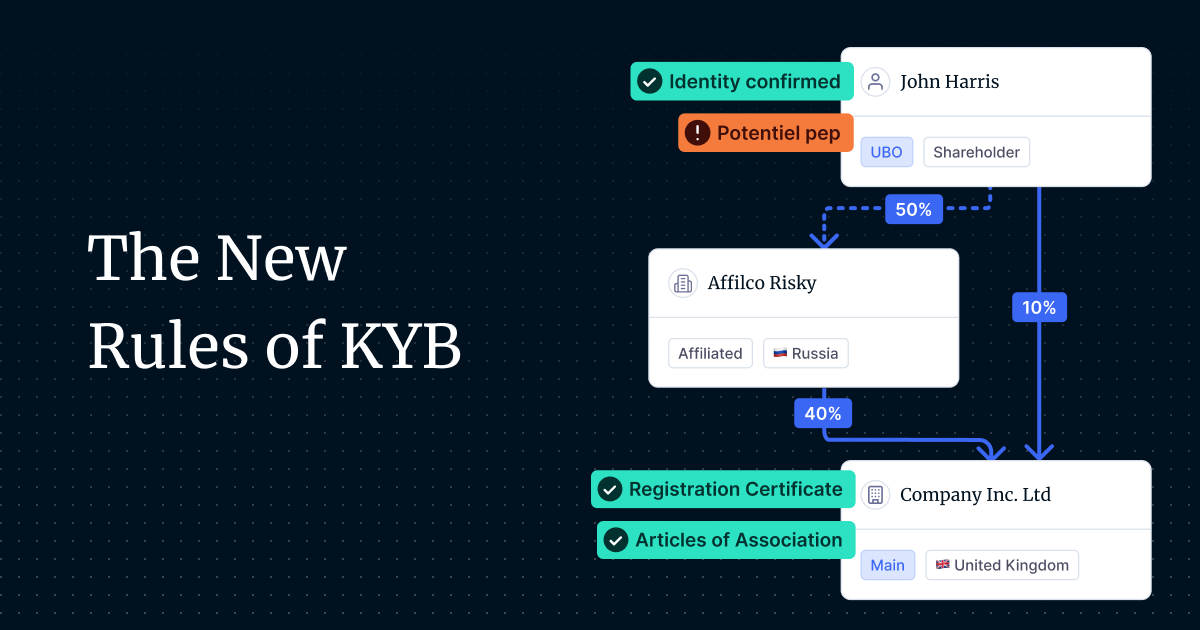
Control can be exercised through direct shareholding, indirect control through intermediate entities, trust arrangements, or partnership structures.
Disclosure Obligations
Companies must update their register within 14 days when PSC details change and notify Companies House within an additional 14 days. Companies must also take reasonable steps to identify PSCs, including issuing notices to shareholders.
Penalties for non-compliance include fines and, in serious cases, imprisonment. Non-compliance also damages reputation and triggers enhanced regulatory scrutiny.
Challenges in Beneficial Ownership Verification
Complex Corporate Structures
Large organizations often have dozens of subsidiaries, joint ventures, and special purpose vehicles across multiple jurisdictions. When ownership chains pass through multiple countries with varying transparency standards, identifying the ultimate beneficial owner becomes resource-intensive.
Nominee shareholding arrangements add complexity. While nominees must disclose beneficial owners, this requires additional verification steps.
Data Accuracy and Verification
The PSC register relies primarily on self-reporting, creating accuracy challenges. Common issues include:
- Outdated information when ownership changes
- Incomplete disclosure of indirect control
- Errors in calculating ownership percentages
- Insufficient understanding of PSC requirements
For organizations conducting KYB verification, relying solely on Companies House data is insufficient. Enhanced due diligence requires cross-referencing multiple sources and ongoing monitoring.
Watch our webinar about Companies House: Signals, Gaps, and Actions to learn exactly what multi-source verification looks like in practice and how recent regulatory changes address these data quality challenges.
Beneficial Ownership and KYB Compliance
Integration with KYB Processes
Beneficial ownership verification sits at the heart of effective Know Your Business (KYB) processes. Anti-Money Laundering (AML) regulations require businesses to:
- Identify beneficial owners controlling 25% or more
- Verify beneficial owner identities using reliable sources
- Understand ownership structures and control nature
- Assess risk based on AML screening results
This means PSC register data forms the starting point, not the endpoint, of KYB due diligence.
Automating Ownership Data Collection
Manual collection of ownership data is inefficient and error-prone. Modern KYB platforms automate through:
- Direct API integration with Companies House for real-time PSC information
- Automated entity resolution matching entities across databases
- Intelligent data extraction using AI to process corporate documents
- Continuous monitoring alerting teams when ownership changes occur
For businesses conducting business verification at scale, automation reduces processing time from hours to minutes while improving accuracy.
Best Practices for Managing Ownership Data
For Businesses
Establish clear ownership governance. Designate a responsible officer to maintain the PSC register and ensure prompt updates.
Implement systematic review cycles. Annual reviews help catch errors and prepare for audits.
Educate shareholders and directors. Ensure all relevant parties understand their disclosure obligations.
Document verification efforts. Maintain records of steps taken to identify PSCs.
Verify director identities promptly. With mandatory identity verification now in effect, ensure all directors complete verification before their next confirmation statement is due.
For Compliance Teams
Never rely on a single source. Cross-reference PSC register data with corporate documents and third-party databases.
Verify identity thoroughly. Use identity verification tools to confirm beneficial owners.
Check verification status. With the November 2025 changes, confirm that directors and PSCs have completed identity verification with Companies House.
Assess the full ownership chain. Investigate intermediate entities until you reach natural persons.
Monitor continuously. Implement ongoing monitoring to detect changes promptly.
Integrate with risk assessment. Feed ownership information into your risk scoring model.
November 2025: Mandatory Identity Verification Now in Effect
On November 18, 2025, the UK implemented one of its most significant beneficial ownership reforms: mandatory identity verification for all company directors and people with significant control (PSCs).
What Changed on November 18, 2025
Mandatory Identity Verification Launched
All UK company directors and PSCs must now verify their identities with Companies House. This verification requirement applies to:
- All new company incorporations (directors must be verified before appointment)
- Existing directors when filing confirmation statements
- All PSCs listed on company registers
This moves Companies House from a passive registry accepting self-reported data to an active verifier confirming the identities of individuals controlling UK businesses.
Personal Verification Codes Required
Directors must provide personal verification codes on confirmation statements filed after November 18, 2025. Companies cannot file without these codes, making verification a practical necessity for continued operation.
The verification process requires:
- Government-issued photo ID (passport, driving license, or national identity card)
- Confirmation of personal details matching Companies House records
- Creation of a Companies House account
- Generation of a unique personal code for filing purposes
Phased Implementation Timeline
While November 18, 2025 marked the legal start date, Companies House is implementing the requirement over 12 months through November 2026. Individual directors' deadlines depend on when their company's next confirmation statement is due:
- Confirmation statement due December 2025: Directors must verify immediately
- Confirmation statement due June 2026: Directors must verify before filing
- Latest deadline: Approximately November 2026 for the final cohort
This phased approach gives directors time to complete verification while ensuring all UK companies will have verified directors by late 2026.
Early Adoption Success
Over 1 million individuals verified their identities early during the voluntary period before November 18, 2025. With approximately 6-7 million total directors and PSCs in the UK, widespread adoption continues throughout the 12-month rollout.
Impact on Data Quality and Transparency
This November change addresses a fundamental weakness in the PSC register: the reliance on self-reported, unverified information. Key improvements include:
Enhanced Data Reliability
- Identity verification confirms that individuals listed as directors and PSCs are real people
- Cross-referencing government ID with Companies House records reduces fraud
- Verified identities make it harder to use fake names or stolen identities
Visible Verification Status
- Companies House records now show whether directors have completed verification
- Compliance teams can check verification status during due diligence
- Non-verified directors after their deadline signals potential compliance issues
Deterrent Effect
- Mandatory verification creates accountability for individuals controlling companies
- Bad actors face higher barriers to using UK companies for illicit activity
- The personal verification requirement increases the perceived risk of detection
Impact on KYB Compliance
This November change fundamentally alters beneficial ownership verification for compliance teams:
For compliance teams conducting KYB due diligence, understanding verification status adds a new dimension to beneficial ownership checks:
New Verification Considerations:
- Has the director completed identity verification with Companies House?
- When is the company's next confirmation statement due?
- If verification deadline has passed, why hasn't the director verified?
- Does non-verification after the deadline signal operational or compliance issues?
Enhanced Risk Assessment:
- Directors who verify early may signal stronger governance
- Delays in verification near deadlines could indicate resource constraints
- Failure to verify after deadlines may indicate compliance problems
- Verification status becomes a factor in overall entity risk scoring
What This Means for Your Process
If you're verifying UK entities, consider updating your KYB workflows to:
- Check verification status of all directors and PSCs during initial due diligence
- Understand confirmation statement timing to assess whether verification deadlines have passed
- Assess verification compliance as a potential risk factor in your scoring model
- Monitor for verification updates during ongoing due diligence to catch late verifications
- Ask questions when directors haven't verified after their deadline passes
Learn more about how these November changes affect ownership data quality in our recent webinar: Companies House: Signals, Gaps, and Actions.
UK Beneficial Ownership Reforms: Implementation Status
The UK continues strengthening its beneficial ownership framework through the Economic Crime and Corporate Transparency Act. Based on The Corporate Transparency and Integrity White Paper's 58 proposed reforms, implementation has been rolling out since March 2024.
Already Implemented (2024-2025)
Coming Soon (2026-2027)
Technology and Innovation
Technology continues transforming ownership data management through:
- Artificial intelligence analyzing ownership structures to identify hidden connections, flag unusual patterns, and predict compliance risks.
- Machine learning algorithms continuously improving accuracy in entity resolution, matching individuals across databases despite name variations or deliberate obfuscation.
- API-first architecture enabling seamless integration of ownership data into workflow systems, CRM platforms, and compliance tools, reducing manual data entry.
- Blockchain and distributed ledger technology offering potential solutions for creating immutable, real-time ownership records, though regulatory adoption remains exploratory.
As these technologies mature and regulatory requirements strengthen, the burden of compliance shifts from manual data gathering to intelligent oversight and decision-making on complex cases.
Conclusion
Beneficial ownership transparency has fundamentally changed how businesses operate in the UK. The PSC register, Register of Overseas Entities, and Trust Register create an interconnected system that makes it harder to hide true ownership. The November 2025 implementation of mandatory identity verification marks another significant step forward in data quality and accountability.
For businesses, compliance is non-negotiable. Legal penalties, reputational risks, and practical challenges make maintaining accurate beneficial ownership information essential. With identity verification now mandatory, directors must proactively complete verification to avoid filing restrictions.
For compliance professionals conducting KYB due diligence, UK beneficial ownership data provides a stronger foundation than ever before. The combination of PSC disclosure requirements and government-verified identities significantly improves data reliability. However, comprehensive verification, ongoing monitoring, and intelligent risk assessment remain essential. The most effective approach leverages technology to automate data collection while focusing human expertise on complex cases.
Ready to streamline your beneficial ownership verification? Explore how modern KYB platforms can automate ownership data collection, check identity verification status, and help you build a more efficient due diligence process that addresses the latest November 2025 requirements.


.png)
.png)